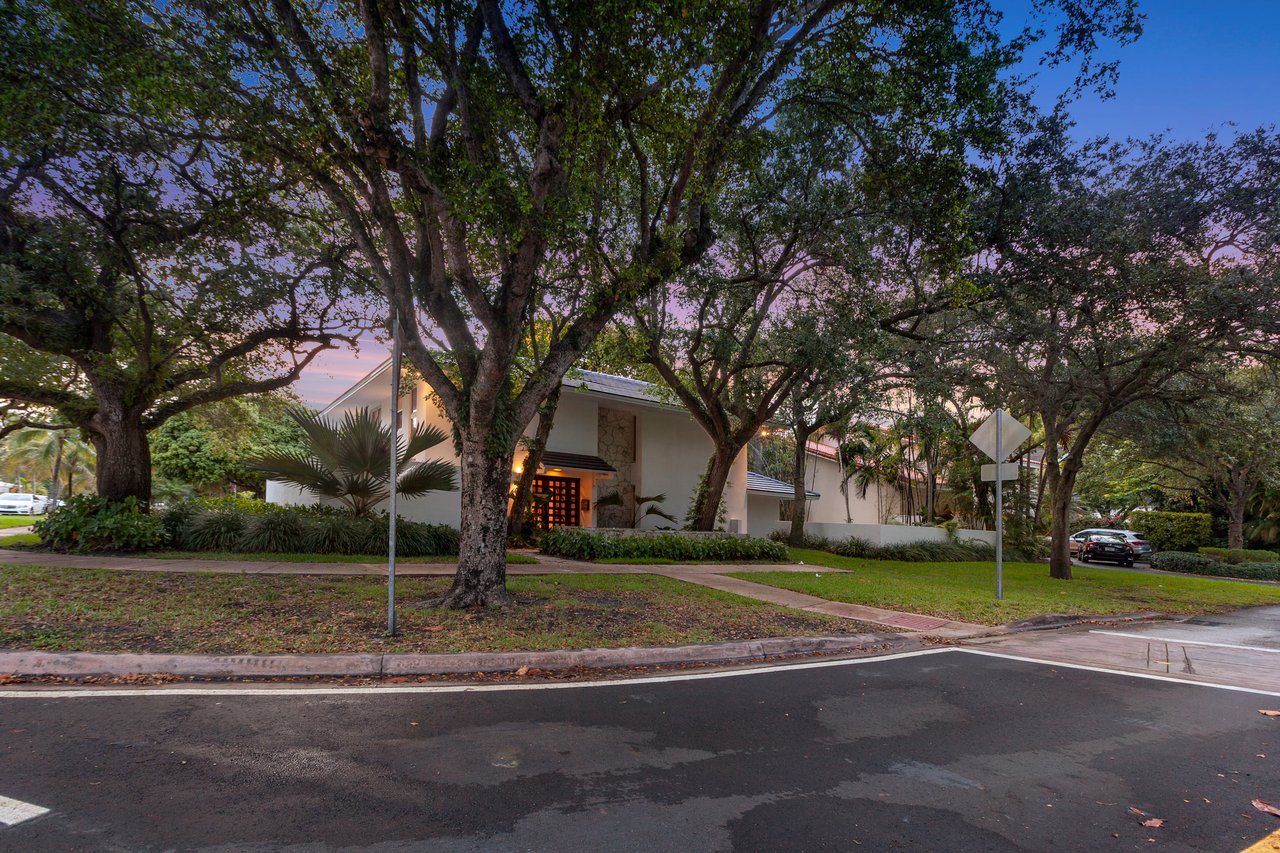
Why Are Home Prices Higher in Coral Gables Compared to Other Miami Neighborhoods?
January 11, 2026
January 11, 2026
Home prices are higher in Coral Gables because the area combines limited housing supply, unusually high household incomes, strict zoning controls, and a long-established identity as one of Miami’s most architecturally cohesive residential cities. Buyers are not paying only for square footage. Pricing reflects scarcity, income concentration, and a level of neighborhood continuity that is rare elsewhere in Miami.
Coral Gables consistently attracts buyers seeking stability, long-term value retention, and proximity to major economic centers without the density found in downtown Miami. That demand persists across market cycles, keeping prices elevated even when surrounding neighborhoods experience sharper fluctuations.
Professionals working with a best Miami real estate agent often notice that Coral Gables buyers enter the market with different expectations, timelines, and financial profiles than buyers elsewhere in the county.
The single strongest economic driver is household income concentration.
Coral Gables households earn substantially more than the Miami-Dade County average, which expands purchasing power and supports higher price ceilings. According to the U.S. Census Bureau American Community Survey (ACS), Coral Gables reports a median household income well above surrounding municipalities, reinforcing sustained demand at higher price points.
Higher incomes do not inflate prices on their own. They interact with limited inventory and zoning constraints, producing a market where competition remains active even at elevated prices.
Coral Gables was designed as a low-density city and continues to enforce that structure.
Large portions of the city restrict multi-family construction
Lot sizes are larger than Miami averages
Historic preservation rules limit redevelopment
Unlike neighborhoods that absorb demand through vertical expansion, Coral Gables absorbs demand almost exclusively through resale competition.
|
Area Type |
New Construction Capacity |
Density Profile |
|
Coral Gables |
Severely limited |
Low-density residential |
|
Downtown Miami |
High |
Vertical, mixed-use |
|
Brickell |
High |
High-rise residential |
|
Little Havana |
Moderate |
Transitional zoning |
Supply rigidity places a structural floor under pricing that does not exist in higher-density neighborhoods.
Buyers assign higher value to Coral Gables because the neighborhood delivers consistency.
Architectural Continuity: Mediterranean Revival and historically protected streetscapes
Urban Proximity: Short access to Downtown Miami, Brickell, and Coral Way employment corridors
Institutional Anchors: University of Miami, Miracle Mile commercial district
Residential Stability: Lower rental turnover than many Miami neighborhoods
This combination produces a residential character closer to a planned city than an organically evolved metro district.
When buyers compare Coral Gables to surrounding options while researching the best neighborhoods to buy a house in Florida, Coral Gables often ranks higher for long-term livability rather than short-term appreciation spikes.
Zoning in Coral Gables prioritizes preservation over expansion.
Height limits, strict setback requirements, and architectural review boards significantly reduce redevelopment velocity. Properties are rarely replaced with higher-density alternatives, preventing price dilution through supply expansion.
This regulatory environment favors owners and disadvantages speculative development, reinforcing pricing durability.
Certain housing categories exert outsized influence on Coral Gables pricing.
Historic Single-Family Homes: Scarce, non-replicable inventory
Waterfront Estates: Limited canal frontage with direct bay access
Gated Enclaves: Sub-markets such as Gables Estates
Large Interior Lots: Rare parcels exceeding standard Miami lot sizes
Even a small number of ultra-high-value transactions can reset neighborhood comparables upward.
|
Market Attribute |
Coral Gables |
Typical Miami Neighborhood |
|
Buyer Profile |
High-income, long-term owners |
Mixed income, higher turnover |
|
Inventory Turnover |
Low |
Moderate to high |
|
Development Flexibility |
Restricted |
Variable |
|
Price Volatility |
Lower |
Higher |
Coral Gables behaves less like a speculative market and more like a preservation-anchored residential enclave.
Coral Gables pricing shows resilience during broader Miami market corrections because:
Sellers are less financially pressured
Many owners hold properties long-term
Buyers often rely less on maximum leverage
Reduced forced selling limits downward price pressure.
Buyers evaluating Coral Gables should expect competition driven by fundamentals rather than hype. Pricing reflects long-standing structural advantages, not temporary trends.
Those seeking alignment between budget and neighborhood characteristics often benefit from targeted searches that identify value pockets within the city rather than headline neighborhoods.
Professionals assisting clients to find coral gables homes within budget typically focus on micro-locations, lot orientation, and renovation history rather than city-wide averages.
Higher household incomes combined with strict zoning and limited inventory sustain elevated pricing.
No. Lower turnover and constrained supply reduce volatility.
Yes. Price stability historically outperforms more speculative Miami sub-markets.
Coral Gables commands higher home prices because it operates under a different economic and regulatory model than most of Miami. Income concentration, preservation-oriented zoning, and structural scarcity combine to produce sustained demand that does not rely on rapid growth or speculative cycles. Buyers are purchasing continuity, not just property.

Miami Real Estate Market Update | October 2026
Coconut Grove Real Estate Market 2026: Houses vs. Condos | Jenilyn Martinez
Coral Gables Homes and Condos for Sale
3% mortgage rate lock-in

Coral Gables Condos Under $2M: What Buyers Need to Know

What It Means for Pinecrest, High Pines, Coral Gables, Coconut Grove, South Miami, and East Kendall
Save Time and Money with this One Home Inspection
The Hidden Cost of Waiting to Sell Your Home in Miami Dade
Whether working with buyers or sellers, Jenilyn provides outstanding professionalism into making her client’s real estate dreams a reality. Contact Jenilyn today to start your home searching journey!