Trane 2026: Miami Real Estate & Home Improvements
Jenilyn Martinez November 2, 2026
Jenilyn Martinez November 2, 2026
By Jenilyn Martinez, Miami Realtor® | Compass
What do air conditioning, home improvements, and Miami real estate have in common? More than you might think.
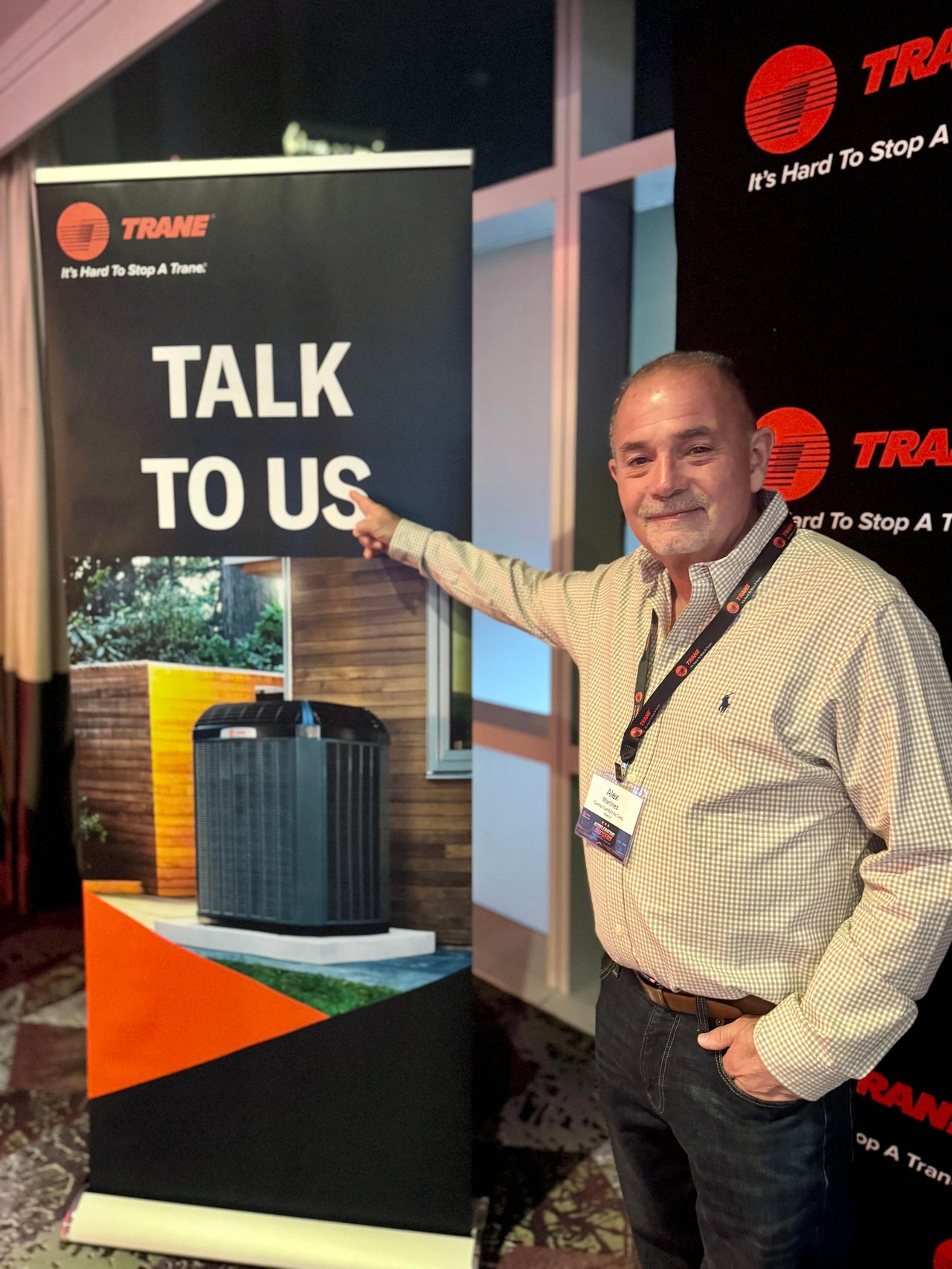
I recently attended the 2026 Trane HVAC conference in Austin, Texas, with my father, who has spent decades in the air-conditioning industry through his company, Central Comfort Air Conditioning, based in Miami-Dade County, Florida.
We went to explore new artificial intelligence systems, smart thermostats, and technology changing the HVAC industry. What I didn't expect was how much of the conference would connect directly to my career in real estate, particularly the relationship between home sales, home improvements, and buyer expectations.
The national housing data presented offered an interesting perspective. But Miami is a different beast, with its own market dynamics, climate considerations, and buyer priorities.
And when it comes to evaluating a home, I have a confession: I secretly judge properties by their AC systems.
I'm a Miami native, born and raised, and I've been around the air-conditioning business for as long as I can remember.
My father has been working in HVAC since before I was born. Through his company, Central Comfort Air Conditioning, a Miami-Dade County HVAC business, I've had a front-row seat to the industry for more than four decades.
I jokingly tell people I have Freon running through my veins.
So when the opportunity came up to attend the 2026 Trane conference in Austin with my dad, I was all in. We wanted to learn more about AI-powered technology, connected thermostats, remote diagnostics, and the innovations changing how HVAC companies operate.
And let's be serious, Austin is never a bad trip.
What I didn't necessarily expect was how much of the conference would overlap with my own profession.
As a Miami Realtor, I spend my days evaluating homes, advising sellers on improvements, helping buyers understand property conditions, and analyzing how local market conditions influence real estate decisions.
Growing up around the HVAC business has given me a perspective that goes beyond finishes and curb appeal. I've learned that what keeps a home functioning comfortably is just as important as what makes it look beautiful.
I can't help it.
When I walk into a property, I notice the air-conditioning system. I look at the brand, age, installation, maintenance, and overall condition.
It's practically instinct.
I even send my dad pictures when I come across an especially clean installation, an interesting connection, or an HVAC brand that isn't as commonly encountered in the Miami homes I tour, such as Daikin.
He gets pictures of AC equipment from me the way other dads might get pictures of their grandchildren.
And yes, I have opinions.
I once toured a $12 million home in Pinecrest and discovered it had a Rheem AC system.
My immediate thought? Well, that tells me something.
I jokingly lowered my expectations for the finishes and appliances before I'd even finished touring the property.
Now, to be fair, Rheem manufactures functional equipment, and the brand alone doesn't determine installation quality. But when I'm walking through a luxury property at that price point, I notice whether the mechanical systems, finishes, appliances, and overall investment align with the asking price.
There's also another lesson my father has taught me over the years: When choosing an AC system, think beyond the brand and consider how easily it can be serviced in Miami.
A less common system isn't necessarily inferior. In fact, some manufacturers produce excellent equipment. But if a particular model isn't widely installed or supported locally, replacement parts may be harder to source, and fewer technicians may have experience servicing it.
That can leave homeowners dependent on the original installing company or a limited network of authorized service providers.
And what happens if you're unhappy with that company?
You want options.
My father's advice has always been to consider established systems that qualified local HVAC contractors know how to maintain and repair. Availability varies by manufacturer and model, so homeowners should investigate local parts and service support before purchasing.
For Miami homeowners, where air conditioning is a necessity practically year-round, that matters.
A good AC system isn't just about how well it cools. It's also about long-term maintenance, service availability, replacement parts, and having the flexibility to choose who works on it.
One of the most interesting presentations at the Trane conference focused on national housing trends and their relationship to residential home improvement spending.
The presentation highlighted a simple relationship:
When people purchase homes, they tend to spend money improving them.
According to figures shared during the conference:
These were national figures presented at the conference, not Miami-specific spending estimates.
And they make sense.
Think about what happens after someone purchases a home.
They replace appliances, paint, update flooring, make repairs, address deferred maintenance, and sometimes tackle larger projects such as a new roof, impact windows, kitchen, or air-conditioning system.
Even a home purchased in excellent condition rarely stays completely untouched.
For HVAC companies, home sales can create demand for equipment replacements and improvements.
For Realtors, the relationship works in both directions: a property's condition influences its marketability, while the purchase itself often triggers additional spending.
The presentation also examined a challenging national housing environment.
The figures shown were snapshots from August and early October 2026, rather than a forecast of what will happen next.
The presentation reported the following national figures:
Housing indicator | Reported figure |
|---|---|
Existing-home sales, annualized | 3.98 million |
Homes available for sale | 1.62 million |
Housing supply | 4.9 months |
Year-over-year change in existing-home sales | -1.2% |
Year-over-year change in inventory | +5.9% |
The takeaway was that housing turnover remained subdued, even as inventory increased.
For industries that benefit from people moving, including HVAC, home improvement, furniture, and remodeling, slower transaction activity can affect demand.
But there is another side to this story.
Homeowners who purchased or refinanced when mortgage rates were considerably lower may be reluctant to sell and take on a more expensive loan.
Instead of moving, some decide to improve the property they already own.
That might mean replacing an aging AC system, updating a kitchen, improving energy efficiency, or making the home more comfortable.
This doesn't mean every homeowner who stays put will renovate. It does mean home improvement demand isn't driven exclusively by home sales.
For Miami homeowners, the decision often comes down to whether investing in the current property makes more financial and practical sense than purchasing another one.
Another slide focused on elevated borrowing costs.
The presentation reported a 30-year mortgage rate of 7.28% as of October 1, 2026, alongside Treasury market figures from October 6.
At those borrowing costs, affordability remains a significant consideration.
Higher financing costs can influence:
This matters in real estate because buyers don't evaluate the purchase price in isolation.
They also consider the cost of ownership, including insurance, property taxes, utilities, maintenance, and anticipated repairs.
And that brings me right back to air conditioning.
National housing data provides useful context, but Miami real estate doesn't always behave like the national market.
Coral Gables, Coconut Grove, Pinecrest, South Miami, and East Kendall each have their own inventory levels, buyer expectations, property characteristics, and pricing dynamics.
Even within the same neighborhood, a renovated home can perform very differently from one requiring substantial improvements.
South Florida also presents ownership costs and maintenance considerations that aren't necessarily reflected in national housing averages.
Our climate is a major factor.
Air-conditioning systems work hard in Miami. Humidity, long cooling seasons, and coastal conditions can affect equipment performance and maintenance requirements.
Buyers are attentive to the age and condition of major systems, particularly when they are already calculating insurance costs, roof condition, impact protection, and potential renovation expenses.
From my experience showing and selling homes throughout Miami, HVAC concerns frequently become part of the conversation.
Buyers may ask:
A newer AC system doesn't automatically increase a home's appraised value dollar for dollar.
But a system that's functioning properly, documented, and well maintained can remove an important concern for prospective buyers.
Conversely, an aging or poorly maintained system can become a negotiating point during inspections.
Although the housing presentation caught my attention, the original reason for attending the conference with my father was to see how artificial intelligence is changing the HVAC industry.
One of the more interesting developments was the use of connected thermostats and remote diagnostic systems.
Rather than waiting for a homeowner to report a problem, certain connected systems can provide participating HVAC companies with operating information and alerts, subject to customer authorization and system capabilities.
That can help technicians investigate concerns, identify potential issues, and sometimes determine whether an in-person service visit is necessary.
The conference also explored how HVAC businesses are using AI to improve customer communication, review job costs, prepare proposals, and streamline administrative work.
From a homeowner's perspective, I see the appeal of technology that makes maintenance more proactive and service more convenient.
From a Realtor's perspective, better maintenance records and greater awareness of a home's mechanical condition can also be valuable when it's time to sell.
This is where I combine what I've learned from growing up around the HVAC business with my experience selling real estate.
Not every older AC system needs to be replaced before listing a home.
The decision depends on its condition, performance, maintenance history, anticipated repair costs, and how the property is positioned in the market.
For example, if you're selling a home in original condition and pricing it accordingly, replacing a functioning system may not produce a worthwhile return.
On the other hand, if you're positioning a property as completely renovated or move-in ready, buyers may have higher expectations for the mechanical systems.
The important thing is consistency between the property's condition, marketing, and asking price.
I always encourage sellers to understand the condition of their major systems before putting their property on the market.
That allows us to make informed decisions instead of reacting to inspection findings after the home is under contract.
The most valuable part of attending industry events isn't always learning something directly related to real estate.
Sometimes it's understanding the industries that influence homeownership.
Growing up around my father's company, Central Comfort Air Conditioning, gave me an appreciation for the mechanical side of a home long before I became a Realtor.
Today, that background helps me ask better questions, recognize potential concerns, and guide my clients through decisions involving property condition and improvements.
The conference reinforced something I've believed throughout my real estate career:
A home's value isn't determined by its appearance alone. It's the combination of location, condition, functionality, maintenance, and what buyers are willing to pay in the current market.
And yes, I'll probably continue secretly judging homes by their AC systems.
Old habits die hard.
A new AC system can improve buyer confidence and reduce concerns about immediate replacement costs. However, it doesn't guarantee a dollar-for-dollar increase in appraised or resale value. The impact depends on the property's condition, location, price point, and comparable sales.
Not necessarily. If the system is functioning properly and has been maintained, replacement may not be needed. If it has significant problems or is nearing the end of its useful life, it's worth evaluating the cost of replacement against the property's pricing and marketing strategy.
Buyers often pay close attention to roofs, impact windows and doors, air conditioning, plumbing, electrical systems, kitchens, bathrooms, and overall maintenance. Which improvements matter most depends on the neighborhood and the buyer's expectations.
It depends on the cost of the work, the home's existing condition, the local competition, and the likely sale price in each scenario. Sometimes strategic cosmetic improvements are worthwhile. Other times, selling as-is with appropriate pricing is the better financial decision.
Home purchases often trigger spending on repairs, remodeling, and equipment replacements. However, homeowners who remain in their properties may also invest in improvements, so renovation demand doesn't depend solely on transaction volume.
The brand can be one consideration, but proper sizing, installation quality, efficiency, maintenance, and system performance are generally more important than the name on the equipment. A professional HVAC inspection can provide a clearer picture of its condition.
The best choice depends on the equipment's performance, efficiency, installation quality, warranty, and local service support.
Before purchasing, ask whether multiple qualified HVAC companies in Miami can service the specific system and whether replacement parts are readily available.
Less common brands aren't necessarily lower quality, but homeowners should consider long-term serviceability and the flexibility to change contractors if they're unhappy with their current provider.
Not necessarily. National trends provide context, but Miami's neighborhoods, property types, inventory, insurance costs, and buyer demographics can create very different local conditions. Buyers and sellers should evaluate recent comparable sales in their specific market.
Jenilyn Martinez is a Miami native and Realtor® with Compass, specializing in residential real estate throughout Coral Gables, Coconut Grove, Pinecrest, South Miami, East Kendall, and surrounding Miami-Dade County neighborhoods.
With deep local roots and a family background in the HVAC industry through Central Comfort Air Conditioning, Jenilyn brings a practical perspective to property condition, home improvements, pricing, and the decisions buyers and sellers face.
Website: jenilynmartinezrealtor.com
If you're considering selling your Miami home and wondering which improvements are worth making before listing, I'd be happy to help you evaluate the property and its competition
Wondering why your Miami house isn't selling? Realtor Jenilyn Martinez explains 7 common reasons, local market trends, and how to attract serious buyers

Pricing a Home in Miami: Why Testing the Market Can Cost You

First two weeks selling a home

By Jenilyn “Jenny” Martinez | Miami Realtor® | Compass Real Estate
From My Family's HVAC Roots to Miami Real Estate: What Homeowners Should Know About AC Systems, Home Improvements, and Property Value

Miami Real Estate Market Update | October 2026

Coconut Grove Real Estate Market 2026: Houses vs. Condos | Jenilyn Martinez

Coral Gables Homes and Condos for Sale

Whether working with buyers or sellers, Jenilyn provides outstanding professionalism into making her client’s real estate dreams a reality. Contact Jenilyn today to start your home searching journey!